What Is an Acoustic-Electric Guitar?
Updated · The Acoustic Guitarist
An acoustic-electric guitar (also called electric-acoustic) is a normal acoustic guitar with a pickup and usually a preamp built in, so you can plug it into an amp or PA with a standard guitar cable. Unplugged it sounds like any acoustic; plugged in it sounds like a louder acoustic, not like an electric guitar.
On this page 7
Acoustic vs electric-acoustic vs electric
| Acoustic | Electric-acoustic | Electric | |
|---|---|---|---|
| Body | Hollow | Hollow (sometimes thinner) | Usually solid or semi-hollow |
| Sound unplugged | Full acoustic | Full acoustic | Very quiet |
| Pickup | None | Piezo, transducer, magnetic or mic | Magnetic pickups |
| Needs an amp | No | Only to get louder | Yes |
| Plugged-in sound | n/a | Amplified acoustic | Electric guitar tone |
| Strings | Steel or nylon | Steel or nylon | Steel |
So the question is not acoustic or electric-acoustic in sound: unplugged, they are the same kind of guitar. The difference is whether you can plug in without a microphone.
How it works
An electric-acoustic has two extra parts: a pickup that turns the vibration of the strings or top into an electrical signal, and usually a preamp that boosts and shapes that signal before it leaves the guitar.
Pickup types
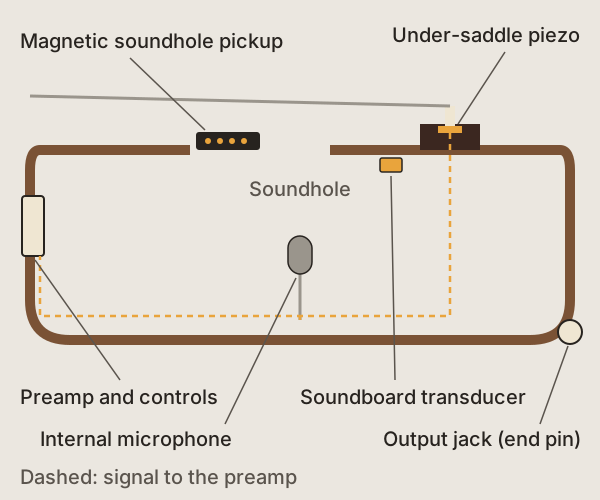
- Under-saddle piezo. A thin strip under the saddle in the bridge. The most common type. It picks up string vibration directly, resists feedback well and is clear and bright, though some players hear it as slightly “quacky” or thin compared with the acoustic sound.
- Soundboard transducer. A small contact pickup stuck to the underside of the top or bridge plate. It hears the top moving, so it sounds woodier and more natural, but it is more prone to feedback at high volume.
- Magnetic soundhole pickup. Sits across the soundhole, like a small electric guitar pickup. It works only with steel strings, sounds warm and resists feedback. Many are removable, which makes them a common way to add a pickup to a plain acoustic.
- Internal microphone. A small mic inside the body, usually blended with a piezo. Sounds the most like the guitar in the room, and feeds back most easily.
- Blended systems. Many higher-end guitars combine two of the above, for example piezo plus mic, with a control to mix them.
The preamp
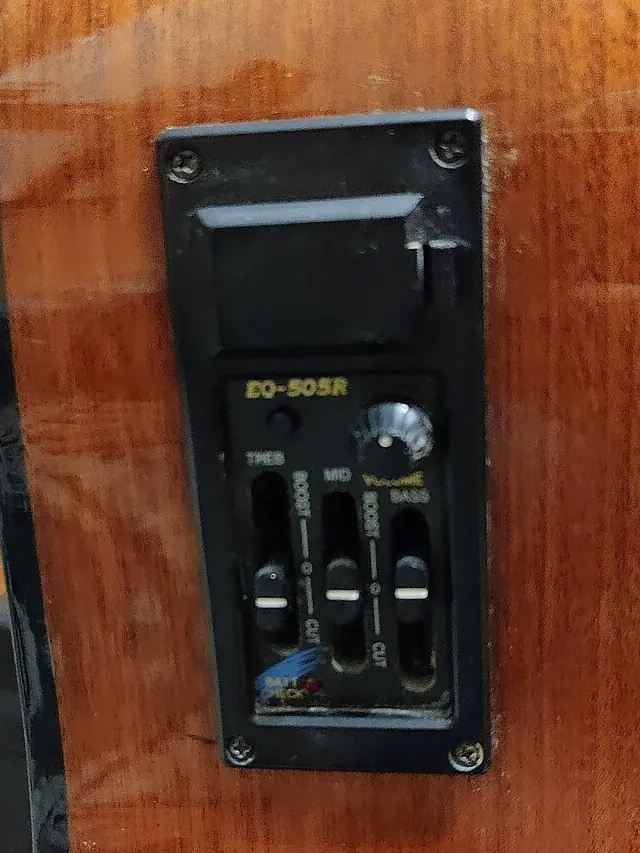
Most electric-acoustics have an active preamp, either a panel cut into the upper side of the body or a small control unit hidden inside the soundhole. Typical controls:
- Volume.
- EQ: bass, middle and treble, sometimes more bands.
- Phase and notch controls to fight feedback.
- A built-in tuner on many models.
A passive pickup has no preamp and no battery. It has a weaker signal, so it usually needs an external preamp or DI box with plenty of gain.
The output jack
The jack is usually inside the end pin at the bottom of the body, where it doubles as a strap button. It takes a standard 1/4 in (6.35 mm) guitar cable. On many active systems, plugging in the cable switches the preamp on, which is why you should unplug the cable after playing.
When you need one
You need an electric-acoustic, or a pickup added to your acoustic, if you will:
- play live with a band or through a PA, where a microphone in front of the guitar is easily drowned out or feeds back,
- play open mics or busk with a small acoustic amp,
- record quickly at home through an audio interface with no mic set-up.
You do not need one for home playing, lessons or campfires. For the cleanest studio sound, many engineers still record acoustic guitars with a microphone rather than the pickup; see how to record classical guitar for mic placement that works on any acoustic.
How to plug in
- Turn the amp or PA channel volume down before plugging in. A cable going into a live input makes a loud pop.
- Use a standard guitar cable from the guitar’s end-pin jack to the amp, or to a DI box if you are going into a PA. A DI box turns the guitar signal into a balanced microphone-level signal that can run a long way to the mixing desk without hum.
- Set the guitar’s volume to about three quarters and the EQ flat (centred).
- Bring the amp up slowly while you strum, until the level is right.
- If it feeds back (a howl that builds on one note), turn down the bass, use the notch or phase control, step away from the speaker, or fit a soundhole cover.
Buying an electric-acoustic
Judge the guitar first and the electronics second. The pickup can be upgraded later; the woods, neck and body cannot. Then check:
- Body size and cutaway. Many electric-acoustics have a cutaway for high frets and some have thinner bodies that feed back less. See acoustic guitar body styles and sizes.
- Pickup type. Piezo for loud stages, a blend with a mic or transducer for a natural sound at moderate volume.
- Battery access. A quick-change battery box beats having to loosen the strings to reach a battery inside the soundhole.
- Model names. Many brands mark a pickup with “E” in the model name and a cutaway plus pickup with “CE”.
Nylon-string guitars come in electric versions too, usually with an under-saddle piezo, because magnetic pickups cannot sense nylon strings.
Hybrids and “acoustic-like” electrics
A few guitars blur the line further. Thin-body hybrids, such as Fender’s Acoustasonic range, look and play more like electric guitars and are designed to be heard mainly through an amp, with electronics that model acoustic sounds. They suit players who switch between electric and acoustic parts on stage, but they are quieter unplugged than a traditional acoustic. See are Fender acoustic guitars good for how that range fits in.
Keep it in tune
A built-in tuner is handy on stage. At home, or if your guitar has none, use the guitar tuner, which listens through your phone or laptop microphone.
FAQ
Is acoustic-electric the same as electro-acoustic?
Yes. Acoustic-electric is the common US term and electro-acoustic the common UK term. Electric-acoustic means the same thing. All describe an acoustic guitar with a built-in pickup.
Can you play an electric-acoustic guitar without an amp?
Yes. It is a full acoustic guitar and works exactly the same unplugged. The pickup and preamp only matter when a cable is plugged in.
Can I plug an electric-acoustic into an electric guitar amp?
It will make sound, but an electric guitar amp colours the tone and can sound harsh or boomy with an acoustic pickup. An acoustic amp, a PA or a keyboard amp, which aim for a flat, full-range sound, suit it better.
Does an electric-acoustic guitar need a battery?
Most models with an active preamp do, often a 9V or AA or coin cell depending on the system. Many turn the preamp on when a cable is in the jack, so unplug the cable when you finish to save the battery. Passive pickups need no battery.
Is an electric-acoustic worse unplugged than a plain acoustic?
Not by much in most cases. The pickup adds a little weight, and the preamp needs a hole cut in the side. A guitar's woods, bracing and build decide its unplugged sound far more than the electronics do.